
This program equips students with a deep understanding of the interdependent relationships among aquatic and terrestrial ecosystems and the humans who populate them.
Bachelor of Science / 120 Credits
Ecological restoration is the art and science of reviving nature’s intricate balance. This program equips students with the skills necessary to transform degraded landscapes into thriving ecosystems.
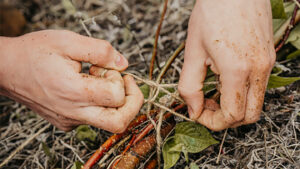
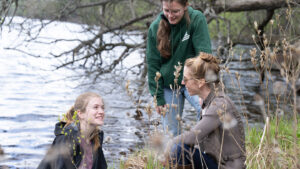
Our breathtaking 14,000-acre campus is a living laboratory teeming with biodiversity, inviting you to dive into the heart of streams, lakes, meadows, and forests, each a dynamic canvas of ecological succession. In proactive partnership with local communities, we don’t just study; we roll up our sleeves and apply our knowledge. We assess and rejuvenate degraded landscapes, codesign ingenious solutions, and boldly shape the future of sustainable land management.
In the field, Ecological Restoration majors harness the power of botany, soil science, hydrology, landscape ecology, and engineering principles to assess and rejuvenate degraded habitats. We decipher the essence of thriving ecosystems, crafting visionary restoration plans that not only yield results but captivate the public’s imagination.
As graduates, you emerge equipped with the prowess to propose transformative solutions to global environmental challenges, no matter where they may arise.
Program Details
- Plant Biology
- General Ecology
- Chemistry I & II
- Geology
- Dendrology
- Introduction to GIS
- Ecosystem Courses
- Soils and Hydrology
- Forest Ecology
- Stream Ecology and Management
- Wetlands Ecosystems and Management
- Watershed Management
- Conservation Biology
- Ecological Restoration
- Restoration Ecology
- Restoration Ecologist
- Environmental Consultant
- Conservation Biologist
- Environmental Scientist
- Wetland Scientist
- Environmental Analyst
- Leader of Non-Profit
At the end of the program students will be able to:
- Apply scientific knowledge and methods of inquiry to understand and study ecosystems.
- Assess the level of damage or degradation to the structure and function of watersheds, rivers and streams, lakes, and wetlands in forested, agricultural, and suburban/urban environments.
- Integrate ecosystem knowledge and human systems into restoration planning, implementation, and adaptive management in order to restore damaged or degraded ecosystems.
|
Semester 1 |
||
|
BIO 110 |
Biology I |
3 |
|
ENG 101 |
Effective College Writing I |
3 |
|
ENV 110 |
Foundations of Environmental Science |
4 |
|
FYS 101 |
First Year Seminar |
3 |
|
MAT 125 |
Algebra |
3 |
|
Semester 2 |
Intro to Computer Apps |
3 |
|
BIO 112 |
Biology II |
3 |
|
FOR 110 |
Dendrology |
3 |
|
ENG 102 |
Effective College Writing II |
3 |
|
Humanities |
3 |
|
|
Social Science |
3 |
|
|
Semester 3 |
Natural Sciences |
3-4 |
|
BIO 210 |
General Ecology |
4 |
|
CHM 110 |
Chemistry I |
3 |
|
ECN 200 |
Principles of Economics |
3 |
|
Elective |
3-4 |
|
|
Semester 4 |
Humanities |
3 |
|
CHM 112 |
Chemistry II |
3 |
|
ENV 120 |
Geology |
3 |
|
or GEO 101 |
General Geography |
3 |
|
GIS 201 |
Introduction To GIS |
3 |
|
HUM 270 |
Ethics |
3 |
|
MAT 210 |
Statistics |
3 |
|
Semester 5 |
Elective |
3-4 |
|
BIO 204 |
Plant Biology |
3 |
|
FOR 330 |
Soils and Hydrology |
4 |
|
ENV 300 |
Restoration Ecology |
3 |
|
Elective |
3 |
|
|
Select any course. |
Responsibility & Expression – Integrated |
3-4 |
|
Semester 6 |
Elective |
3-4 |
|
ENV 330 |
Conservation Biology |
3 |
|
FOR 310 |
Forest Ecology |
3 |
|
ENV 340 |
Watershed Science |
3 |
|
Elective |
3-4 |
|
|
Elective |
4 |
|
|
Semester 7 |
Elective – UD |
3-4 |
|
ENV 471 |
Stream Ecology And Management |
3 |
|
ENV 473 |
Wetland Ecosystems and Management |
3 |
|
System Cluster |
3 |
|
|
Elective – UD |
3-4 |
|
|
Elective – UD |
3-4 |
|
|
Semester 8 |
Liberal Arts Elective |
3-4 |
|
ENV 400 |
Ecological Restoration |
3 |
|
SCI 495 |
Science Capstone |
4 |
|
Human System Cluster |
3 |
|
|
Elective |
3-4 |
|
|
Elective – UD |
4 |
|
|
HUMAN SYSTEM CLUSTER – CHOOSE 2 COURSES |
Track Cluster-UD |
3 |
|
Environmental Impact Assessment, Environmental Law and Regulatory Processes, Natural Resource Economics, Philosophy of Nature, Sustainable Development |
Elective-UD |
3 |
Where the Learning Happens
See It for Yourself
Questions? Let's get in touch.

Faculty
Associate Professor of Environmental Science
Faculty
Program Coordinator, Ecological Restoration