Expand any toggle below to learn more about each inductee.
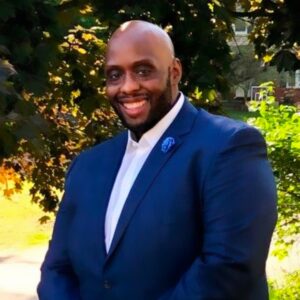 For Lendell Eaddy, cooking has always been about more than preparing a meal. It is an act of service, a way to build community, and an opportunity to change lives.
Raised in the Bronx, Eaddy discovered his love for cooking at an early age, preparing meals for family and friends long before he considered it as a career. His path to Paul Smith’s College began when Jim Tucker, then an admissions counselor, visited his New York City high school and introduced him to the College’s culinary program. That conversation changed the course of his life. After a memorable 10-hour bus trip to the Adirondacks, Eaddy arrived on campus and found an entirely new world—one that challenged him, inspired him, and shaped the educator he would become.
After graduating in 2005, Eaddy worked as an executive chef in Lake Placid before expanding his experience into restaurants, corporate dining, and healthcare. Eventually, a call from his former mentor, Chef Andrew Ottati, led him back to education. Today, he teaches culinary arts at the Southern Adirondack Educational Center, where he has become one of the region’s most respected career and technical educators.
His classroom extends well beyond recipes and knife skills. Eaddy teaches confidence, professionalism, and perseverance while helping students discover pathways into higher education and the culinary profession. Year after year, former students and their families write to thank him for the impact he has had on their lives, a testament to the relationships he builds and the standards he sets.
Eaddy believes that food brings people together. Whether celebrating life’s milestones or offering comfort during difficult times, he sees every meal as an opportunity to care for others. That philosophy has defined both his career and his life, making him a remarkable ambassador for Paul Smith’s College and its tradition of learning through service.
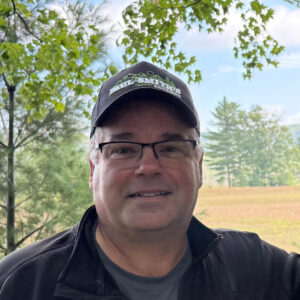 For nearly four decades, Dennis Flynn has inspired young people to pursue careers in forestry, conservation, and natural resource management by teaching them where those careers begin—in the woods.
A 1988 graduate of Paul Smith’s College’s Forest Technology program, Flynn turned his passion for forestry into a career dedicated to career and technical education. As the longtime Environmental Conservation and Forestry instructor at WSWHE BOCES’ F. Donald Myers Education Center in Saratoga Springs, he has introduced hundreds of high school students to forestry, arboriculture, wildlife management, and land stewardship through immersive, field-based learning.
Flynn has earned statewide recognition for his commitment to forestry education, including the Society of American Foresters’ Forestry/Environmental Education Award and the New York Forest Owners Association’s Forester of the Year Award. Throughout his career, he has built strong partnerships with government agencies, private industry, and colleges to ensure students graduate with real-world skills and meaningful career opportunities.
One of Flynn’s signature initiatives is his leadership of the annual Saluting Branches Day of Service, where students work alongside professional arborists to care for trees at the Gerald B.H. Solomon Saratoga National Cemetery. The project teaches technical skills while reinforcing the values of service and respect, and many former students return each year as industry professionals to mentor the next generation.
Flynn has remained deeply connected to Paul Smith’s College throughout his career, regularly attending alumni events and encouraging students to continue their education in the Adirondacks. Many graduates of his program have followed the same path he did, enrolling at Paul Smith’s to build careers in forestry and conservation.
His legacy is measured not only by the students he has taught, but by the professionals, land managers, and environmental stewards they have become.
 Karen Frank has spent more than four decades demonstrating what it means to remain connected to Paul Smith’s College. Whether mentoring prospective students, raising scholarship funds, or welcoming alumni back to campus, her dedication has strengthened the College community in countless ways.
After graduating in 1983, Frank built a career spanning more than 25 years in public education as both a teacher and educational consultant. She also worked with an Adirondack youth camp and in the travel industry, experiences that reinforced her passion for helping others discover new opportunities. Throughout her career, she became one of the College’s strongest advocates, encouraging many students to consider Paul Smith’s as the next step in their education.
Since joining the Alumni Association Board of Directors in 2016, Frank has become one of its most active leaders. She has chaired the Nominating Committee, led the Fundraising Committee, served on the Scholarship Committee, and coordinated the Alumni Association’s annual silent auction, its largest scholarship fundraiser. Her work has directly supported future generations of students while strengthening alumni engagement across the country.
Frank is also a familiar face at nearly every major campus event. From Reunion Weekend and Sugarbush to Family Weekend and admissions events, she consistently volunteers wherever help is needed. She enjoys connecting with prospective students, answering questions about college life, and sharing the experiences that shaped her own journey at Paul Smith’s.
Beyond the College, Frank volunteers with the National Multiple Sclerosis Society, supporting fundraising events and serving as a resource for individuals newly diagnosed with the disease. Her commitment to service reflects the same generosity she has shown the Paul Smith’s community for decades. Her leadership, enthusiasm, and willingness to serve have made her an ambassador for the College and a trusted mentor for alumni and students alike.
 Peter Frank has dedicated his career to protecting New York’s forests while remaining an unwavering advocate for Paul Smith’s College and its alumni.
A 1983 graduate, Frank built a distinguished career with the New York State Department of Environmental Conservation, where he now serves as Assistant Director of Lands and Forests. Along the way, he has held positions as a fish and wildlife technician, surveyor assistant, forester, Urban Forestry Coordinator, and Bureau Chief of Forest Preserve and Conservation Easement Management. His work has influenced the stewardship of millions of acres of public lands across New York State.
Frank has also been a driving force within the Paul Smith’s College Alumni Association. Since joining the Board of Directors in 2016, he has served as vice president, secretary, chair of the Bylaws Committee, and an active member of numerous committees. His thoughtful leadership has helped strengthen alumni engagement while ensuring the organization remains focused on supporting students and the College’s future.
Professionally, Frank has mentored countless Paul Smith’s graduates entering careers in forestry and natural resource management. His expertise in forest policy, conservation easements, and public land management has made him an invaluable resource for alumni and the College alike. Whether advising young professionals or sharing technical knowledge with faculty and administrators, he has consistently invested in the next generation of forestry leaders.
He is also a familiar volunteer at Reunion Weekend, Sugarbush, and other alumni events, where he is known for connecting graduates across generations and helping strengthen the lifelong bonds that define the Paul Smith’s community.
Frank’s career reflects the values of stewardship, service, and leadership. Through his professional accomplishments and his enduring commitment to the College, he has helped ensure that Paul Smith’s graduates continue to make a lasting impact on New York’s forests and the communities that depend on them.
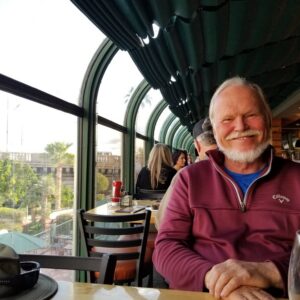 For nearly four decades, Hans Michielen helped define what a Paul Smith’s College education looked like. As a teacher, mentor, builder, and problem solver, he transformed the College’s forestry program through hands-on learning that continues to shape students today.
A U.S. Air Force veteran, Michielen enrolled at Paul Smith’s College after his military service and graduated from the Forest Technician program in 1973. Two years later, he returned to campus as a technical assistant in the Forestry Department, beginning a remarkable 39-year career devoted to student success.
Michielen quickly turned the department’s tool room into a working shop and training center, creating an environment where students learned by doing. As the College’s lead chainsaw safety instructor, he introduced the Game of Logging program to campus, helping students earn industry-recognized certifications while raising safety standards throughout the forestry profession.
In 1988, he assumed management of the College’s sugarbush. Under his leadership, maple syrup production increased from fewer than 50 gallons annually to more than 1,000 gallons, transforming the operation into a nationally respected teaching facility. He also helped establish the annual Sugarbush Breakfast, a tradition that continues to welcome hundreds of visitors to campus each spring.
Michielen’s impact reached every corner of the College. Working alongside students, he helped build or improve the sawmill, outdoor classrooms, campus docks, trails, lean-tos, bridges, the Jenkins Mountain Trail, and numerous facilities at the Visitor Interpretive Center. His philosophy was simple: every project was another opportunity for students to gain practical experience while leaving the campus better than they found it.
Though he rarely sought recognition, Michielen became one of the College’s quiet cornerstones. His legacy lives on in the facilities he built, the traditions he established, and the generations of forestry professionals whose careers began under his guidance.
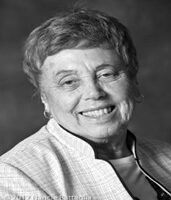
Dr. Elizabeth W. Thorndike has devoted her professional life to advancing environmental policy, conservation, higher education, and science-based stewardship, leaving an enduring mark on the Adirondack Park and the institutions dedicated to its future.
A member of the Paul Smith’s College Board of Trustees from 2011 to 2026, Thorndike brought decades of experience in natural resource policy, environmental education, and public service to the College. Her doctorate in natural resource policy and planning from Cornell University built upon a career grounded in interdisciplinary scholarship and public engagement. She also served as an adjunct faculty member at Cornell for nearly two decades, teaching Wilderness: Sustaining the Built Environment and helping prepare future environmental leaders.
Thorndike’s influence on New York’s environmental landscape is extensive. She served nearly 16 years as a commissioner of the Adirondack Park Agency, where she chaired the Park Policy and Planning Committee and contributed to the complex work of balancing conservation with the needs and aspirations of Adirondack communities. She subsequently served for 20 years on the board of the New York State Energy Research and Development Authority (NYSERDA), chairing its Waste Facilities Committee and addressing issues surrounding the West Valley Demonstration Project and radioactive nuclear waste.
Earlier in her career, Thorndike helped establish the Center for Environmental Information (CEI) in Rochester. Beginning in 1974, she served as its executive director and later as a board member through 2014. The organization, now known as Genesee River Watch, has continued its work for more than five decades in environmental education and public engagement.
Thorndike was also instrumental in establishing the Adirondack Research Consortium, an organization dedicated to bringing research, science, and informed discussion to the challenges and opportunities facing the Adirondack region. In recognition of her extraordinary contributions, the Consortium named its highest honor the Elizabeth W. Thorndike Adirondack Achievement Award.
Her commitment to the natural world has been both professional and deeply personal. A lifelong Girl Scout, Thorndike found recreation and renewal through wilderness canoe trips with her husband and family throughout New York and New England, as well as wilderness camping and hiking in the White Mountains, Green Mountains, Maine, and the Adirondacks. These experiences reinforced the connection between environmental stewardship and the human experience that has characterized so much of her work.
Throughout her years of service to Paul Smith’s College, Thorndike championed its mission of preparing environmental leaders through experiential education. She understood the distinctive opportunity the College provides: placing students within the landscapes they study and connecting academic learning with the practical challenges of stewardship.
For Thorndike, the opportunity to become part of the Paul Smith’s community in the later years of her career was, in her words, “a blessing.” Her thoughtful leadership, strategic vision, scientific perspective, and lifelong commitment to the Adirondacks have strengthened both the College and the broader region.
Her legacy can be found not only in policies, institutions, and organizations, but also in the generations of students, researchers, conservation professionals, and community leaders whose work has been shaped by the values she has championed: curiosity, public service, environmental responsibility, and a deep respect for the wilderness.
Elizabeth W. Thorndike’s career stands as a testament to the lasting difference one person can make when a life of public service is guided by knowledge, stewardship, and a profound commitment to place.