Paul Smith’s College is formalizing what it has practiced for generations.
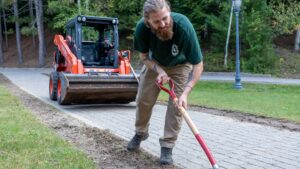
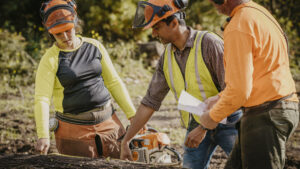
Here is a scene that could represent almost any era of Paul Smith’s College: A student in the field, hands occupied, attention fixed on the work in front of them. It might be a forestry student calibrating a timber cruise. Or perhaps a culinary student in whites at a station serving guests. Or a fisheries and wildlife sciences student wading into a cold stream for a macroinvertebrate count. The task and the era may change, but the mindset behind it has not.
That mindset—learning through hands-on work in real settings with real stakes—is the animating principle behind a significant step the College is now taking. Starting with students entering in Fall 2027, Paul Smith’s College will launch a new Work Experience Program that gives selected students meaningful work connected to their education. As a part of this, participating students will earn grant-based compensation that will help reduce their cost of attendance.
Rather than representing a dramatic change in direction, the transition builds upon the College’s longstanding commitment to experiential, place-based education. It gives greater structure to the relationship between academics, work, and career preparation while creating new opportunities for students to offset the cost of attendance through compensation connected to meaningful, credit-bearing work.
Building on an Existing Foundation
Paul Smith’s College has always believed education is strongest when students apply what they learn. Its students have long developed their skills in labs and forests, kitchens and research stations, and the campus enterprises that keep the College running. The Work Experience Program builds a structured pathway on top of that tradition.
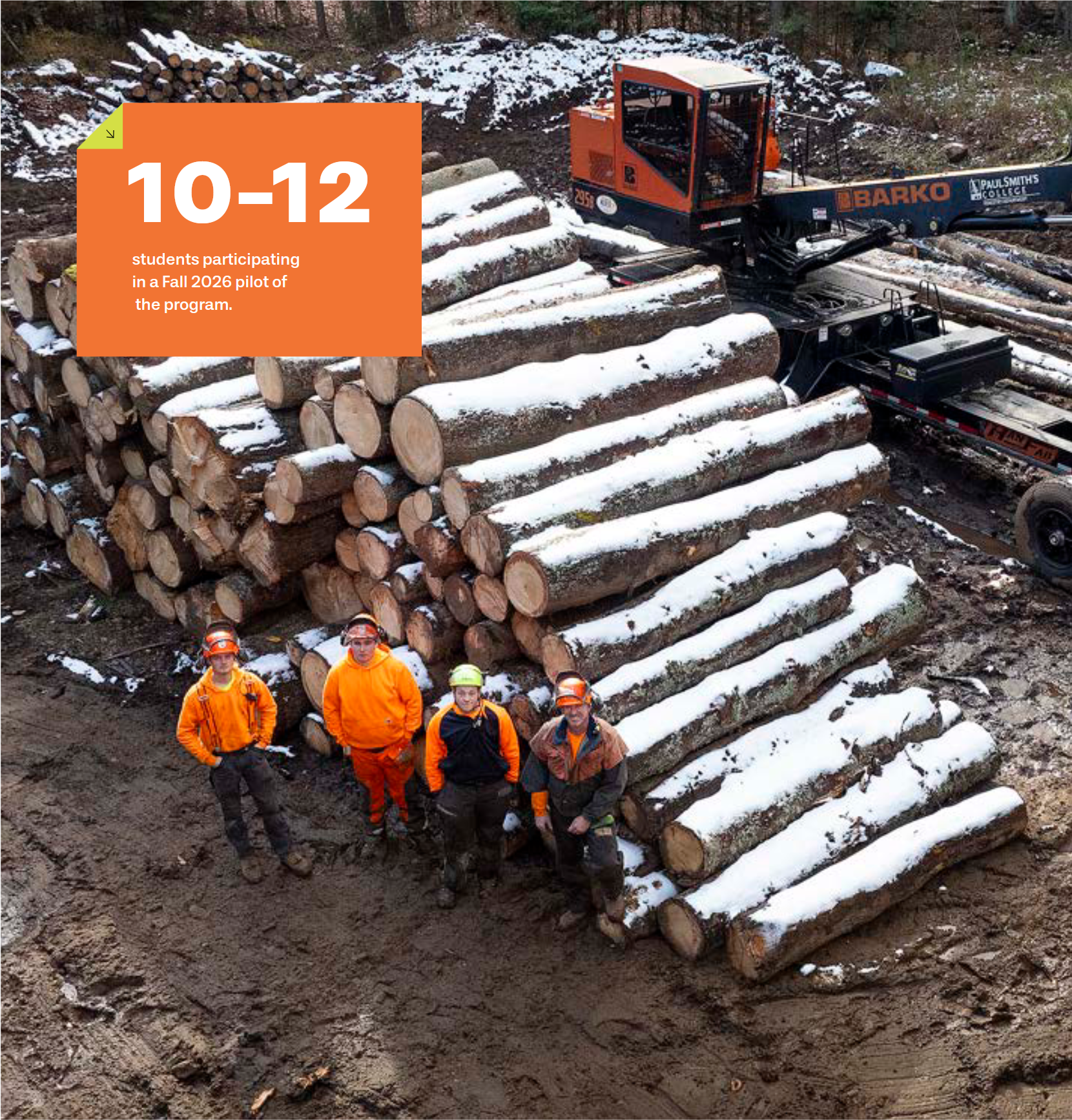 Participants take on supervised positions aligned with their academic interests, developing the habits, judgment, and technical skills employers look for. An arboriculture student, for example, might join the campus tree maintenance crew, putting classroom training in tree biology and risk assessment directly to work managing the trees that shape campus every day.
As a result, their work is not incidental to their education; it is structured, supervised, intentionally connected to learning outcomes, and recognized as part of the educational experience.
A key part of this is the work transcript. This is a formal record, similar to what work colleges around the country have long used, that documents the specific skills, responsibilities, and competencies a student developed on the job, verified by their work supervisor. Where a diploma shows what a student studied, the work transcript shows what they did, giving graduates something concrete to bring to an employer alongside it.
The program also responds to the changing expectations of students and families. A college degree remains valuable, but many prospective students also want to know how their education will prepare them for a career and whether they can graduate with less debt. By combining meaningful work with grant-supported compensation, the Work Experience Program helps address both priorities.
That advantage has always existed at Paul Smith’s College. Employers consistently seek graduates who can contribute immediately, and students who build professional experience over multiple years develop deeper judgment than a single internship can offer. Paul Smith’s graduates have always been able to describe projects they managed and problems they solved, not just concepts they studied. The Work Experience Program doesn’t just preserve that advantage. It documents it and extends it to more students.
The Historical Thread
Although the Work Experience Program is new, the philosophy behind it has long been part of Paul Smith’s College.
From its earliest years, the College has defined itself through the relationship between its students and its place. The Adirondacks are not simply the setting for the education; they are part of the curriculum itself. Faculty are both practitioners and professors, bringing professional experience directly into the classroom. The institutional culture has always reflected the belief that understanding something intellectually and being able to do it are inseparable.
To that end, baking and pastry students produce for actual customers. Forestry students operate the College’s student-run sawmill. Students in the natural sciences conduct field research throughout the Adirondack Park, one of the most ecologically significant landscapes in the eastern United States. And students work with draft horses, in working forests, on lakes and streams, and in research stations that serve communities beyond campus. These experiences have always involved real work in professional settings, with real expectations and real outcomes. As such, our students leave campus having practiced their profession, not just observed it.
Paul Smith’s College did not arrive at this moment by discovering a new philosophy. The Work Experience Program formalizes what has long distinguished a Paul Smith’s College education, and extends it so that more students graduate with documented professional experience, reduced educational costs, and a clearer line between what they study and what they do.
Piloting the Program
Though the formal launch of the program comes in fall 2027, a pilot program is already in progress for the fall 2026 semester. The College is fielding a small student facilities crew that is taking on custodial, grounds, and maintenance work across campus.
 The pilot’s job is to guide what comes next. What the College learns this fall about supervising the work, supporting students, and building the transcript in practice will directly shape the program’s next stage: an expansion in available competitive positions, open to incoming students, when the Fall 2027 class arrives. If demand from students and campus departments outpaces that number, the College will look to create more.
The institutional changes accompanying this transition will take time to implement. Developing this program requires building consistent structures around student work: how it is supervised, how it connects to academic credit, how learning is assessed, and how students are supported throughout the experience. Many of those elements already exist across programs throughout the College. The opportunity now is to organize them into a cohesive programmatic model.
None of that is simple. But Paul Smith’s College begins from a position that few institutions can claim: the culture already exists. Students and faculty already treat meaningful work as essential to education. This initiative builds on that foundation, starting with this fall’s pilot crew and growing toward the Fall 2027 cohort, reinforcing values that have defined the College for more than 75 years.
What This Means Going Forward
Paul Smith’s College has never fit neatly into the traditional higher education template. It is too deeply connected to its place, too committed to experiential learning, and too convinced that there should be little distinction between the classroom and the field. That specificity has always been one of its greatest strengths.
The Work Experience Program builds on that identity. Participants will graduate with more than a degree: real professional experience, a documented record of what they accomplished, and a clearer sense of how their education translates into the workplace.
What makes this transition notable is not the change it represents but the continuity it confirms. Paul Smith’s College has always believed that education and work reinforce each other, and that students learn best when they’re entrusted with real responsibility. The Work Experience Program carries that forward, giving more students a way to reduce the cost of college and graduate ready for whatever comes next.
This article is from the Fall 2026 issue of the Paul Smith’s College Magazine.