
How Coach Matt Redefines Success to Unlock Athletes
Coach Matthew Dougherty has spent more than two decades coaching collegiate athletes, but he still describes his job in surprisingly simple terms.
“My job as a coach is to simply whisper into people’s ears that they can do more than they dream of.”
The statement explains a great deal about the sustained success of Paul Smith’s College’s Nordic ski program, but it also reveals something larger about the College itself. Dougherty’s philosophy is not centered on medals, podiums or rankings. Those achievements matter—and his teams have earned plenty of them—but they are outcomes rather than objectives. His real work is helping students discover that the limits they believe exist are often self-imposed. And he starts that process with trust.
The Golden Ticket
Raised in nearby Saranac Lake, Dougherty developed his understanding of coaching through the Adirondacks long before he ever led a collegiate practice. He grew up before smartphones and constant connectivity, when free time meant heading outside. Later, while studying outdoor recreation and outdoor education, he encountered an idea that resonated with his own experience: humans and the natural world are fundamentally built for one another. He has carried that lesson into every season since.
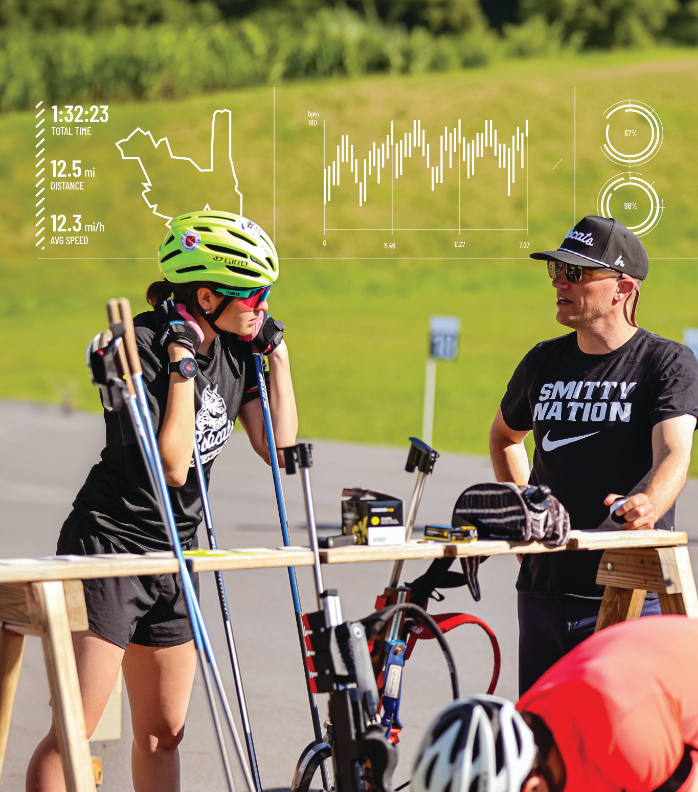 For Dougherty, the forests, trails and mountains surrounding Paul Smith’s College are more than scenic backdrops. They are active parts of training. Nature offers perspective, quiets distraction, and reminds athletes that growth rarely happens in comfortable conditions. Through this, the environment becomes another coach, reinforcing lessons that apply as readily in classrooms and careers as they do in competition.
That perspective also shapes how he teaches athletes to think about success. In an era when social media encourages constant comparison and college sports often reward outcomes above all else, Dougherty asks his athletes to focus on something entirely different: the quality of their own effort.
“You’re really only competing against yourself,” he says. “I can’t control if somebody else has the race of their life. That’s great for them. What I can control is whether I showed up as the best version of myself on that day.”
The distinction sounds simple, but it transforms the emotional experience of competition. A race is no longer defined solely by the finishing order. An athlete recovering from illness who battles to the finish line may have accomplished exactly what they needed to accomplish. Likewise, a champion who falls short of their own preparation still has meaningful work to do. By removing external comparisons from the equation, Dougherty helps athletes replace comparative pressure with internal purpose.
His philosophy reaches its clearest expression in the way he describes confidence. He rejects the idea that coaches manufacture belief. Instead, he argues that confidence already exists inside every athlete waiting to be uncovered.
“The golden ticket,” he says, “is to unlock their brain to believe that it is possible.”
That process is a daily practice. Dougherty works with his athletes to overcome their doubts so that, eventually, the next impossible task suddenly looks achievable because they have already rewritten their expectations before. The lesson repeats over months and years until students begin supplying the belief themselves.
By graduation, Dougherty hopes athletes understand something larger than skiing: that what they once considered impossible was often just unfamiliar.
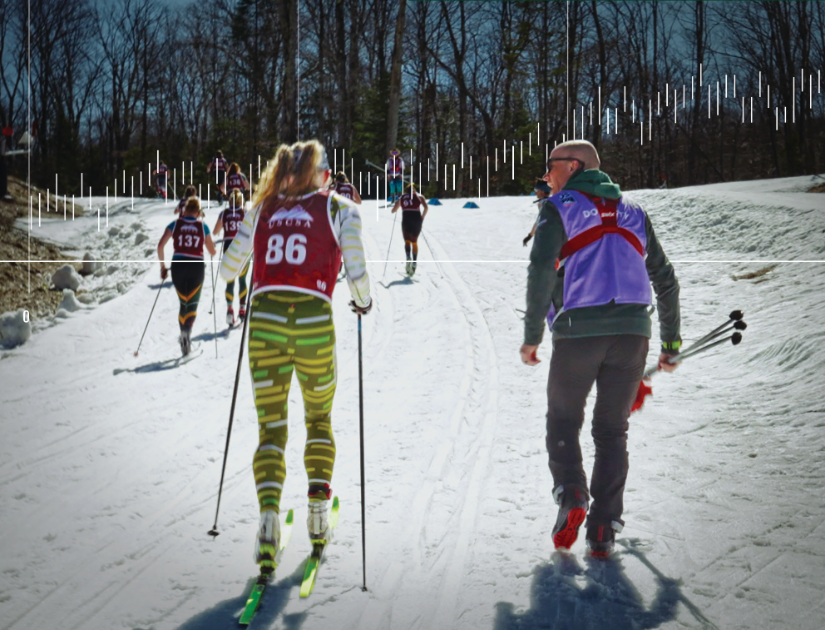
That idea extends well beyond athletics. He speaks frequently about alumni who never qualified for national championships or earned All-American honors but nevertheless found lasting success because they learned to embrace difficult work. The habits developed during early morning practices, exhausting workouts and disappointing races become tools for navigating careers, families and unexpected challenges.
For Dougherty, that is the real value of collegiate athletics. It also informs the way he recruits.
More Than a Podium
Many prospective student-athletes consider Paul Smith’s College alongside NCAA Division I programs with larger budgets and greater visibility. Dougherty could compete by promising extraordinary outcomes, but he refuses to make guarantees he cannot control. Instead, he offers something more durable.
“If an athlete comes in and does the work,” he says, “they’re going to grow.”
Some recruits choose other paths, and he accepts that without hesitation. His goal is not to convince every talented skier to enroll at Paul Smith’s College. Rather, his goal is to find students who believe in collective success, embrace long-term development and want to become part of something larger than themselves. And that commitment to authenticity has become one of the program’s defining strengths.
Over the years, colleagues have suggested that adopting a louder, more traditional coaching persona might attract additional recruits. Dougherty has never been interested. “I always want to make sure I am being my authentic self,” he says. “Authenticity is really important.”
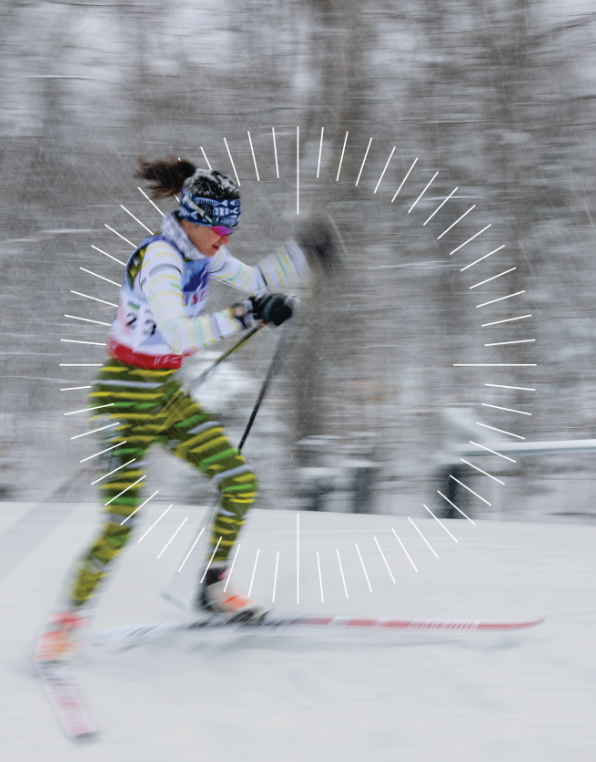 For the athletes who choose Paul Smith’s College, that honesty establishes expectations from the beginning. Every member of the team contributes, regardless of where they finish on race day. One student may lead the field while another organizes equipment for travel, keeps teammates on schedule or quietly checks in on someone having a difficult week. Those responsibilities matter because the program measures success through shared investment rather than individual recognition.
“We’re in a journey together,” Dougherty explains. “It’s hard. It’s a grind. But if we can do it together, then great things will come of it.”
That collective mindset has helped Paul Smith’s College repeatedly outperform expectations. More importantly, it creates an environment where students know they belong even while struggling.
Dougherty believes that support is what distinguishes exceptional programs from merely successful ones. Development is rarely linear. Athletes improve at different rates, encounter setbacks and recover in different ways. The critical question is whether the people around them continue believing in their potential during those difficult stretches.
He argues that small colleges possess a unique advantage in providing that kind of sustained attention.
“Does a place give you that support, and does it give you the space to grow?” he asks. “Some places might say, ‘You’re underperforming, and I’m not going to give you attention anymore.’ But small colleges just keep feeding you and say, ‘We believe in you.’”
This philosophy mirrors the broader educational experience at Paul Smith’s College. Students arrive with different backgrounds, ambitions and abilities, but they share a willingness to engage fully with the work before them. Whether learning in laboratories, kitchens, forests or on ski trails, they are challenged to develop through experience rather than simply absorb information. Dougherty sees athletics as another version of that same mission.
His favorite stories are rarely about championships. They are about transformation: students who doubted themselves until persistence proved otherwise, teammates who discovered purpose through service to others and graduates who carried those lessons into every corner of their lives.
In the end, his coaching philosophy comes back to a quiet repetition that unfolds over hundreds of practices and countless conversations: Keep doing the work. Keep believing. Keep moving forward.
That whisper eventually becomes the athlete’s own voice, and once that happens, the finish line is only part of the story.
This article is from the Fall 2026 issue of the Paul Smith’s College Magazine.