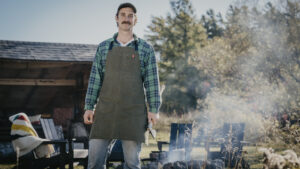
Meet Chef Robert Dumas, the nationally recognized culinary leader behind our Institute of Adventure Hospitality and Food.
Chef Robert Dumas brings serious credibility to Paul Smith’s College. Recently featured in Food & Wine, he serves as director of our new Institute of Adventure Hospitality and Food. With decades of experience spanning elite kitchens, education, food systems, and leadership, Dumas represents the caliber of professionals shaping Paul Smith’s College today—leaders who elevate the work, strengthen programs, and inspire the next generation of hospitality innovators in the Adirondacks. Get to know Chef Dumas and the thinking behind our approach to hospitality education.
Q: Chef Dumas, tell us about yourself and how you came to Paul Smith’s College.
A: I’ve had a long and interesting career in food service. I grew up in New Orleans and started cooking there. The culture in New Orleans is very food driven, and it also ties in with classical French cooking, so it was good preparation for entering a career in food.
I worked around the city, went to a high school culinary program, and got a certificate in cooking. That was enough to get me some good kitchen jobs, but not enough to really help me progress to the next level. I decided I wanted to go to culinary school and earn a four-year degree. The pathway for me was the GI Bill™ through the military, so I enlisted in the Navy, where I did two tours.
 The first was on a nuclear submarine, where I cooked for about five years. It was a really interesting experience with a great crew and a unique responsibility—being the person who provides the food. I had a real passion for it and excelled, which led to an opportunity to interview for a position working for the Obama family.
I went to the White House for about four years and cooked for President Obama and his family, both domestically and internationally. At the end of that tour, I moved to Vermont and worked at the New England Culinary Institute. When I first started there, I was the school’s fellow, finishing my bachelor’s degree using the GI Bill™ while also teaching. I stayed on as a faculty member, teaching, doing demonstrations, and cooking for events at the school, including some TV spots.
When I left Vermont, I moved to Maine, but before that, I took a cross-country road trip and explored national parks out west. I’ve always been an avid angler and mountain biker, and this was an overdue trip. I’d gone straight into the military and food service, and had never taken more than two weeks off. That experience cemented my love for the outdoors and outdoor recreation. It was also a neat intersection of food and outdoor living—all the cooking was done over a campfire, and you had to be thoughtful about what you could carry without refrigeration.
When I got to Maine, I worked as Director of Food Service for a multi-unit regional chain selling pizza, sandwiches, and salads. I was responsible for 23 locations, about $15 million in sales, and 97 employees. It was very much the business side of food—menu design, purchasing relationships, and creating standard operating procedures so we had good replicability. It was a cool and challenging job, and I learned a lot about the limitations of local and scratch cooking in certain labor models.
“Adventure hospitality gives us room to do novel things that other programs aren’t exploring.”
Ultimately, I wanted to get back to scratch cooking and using local, seasonal foods, which was hard in that setting. I interviewed for a position at the University of Maine, where I taught in the Food Science and Human Nutrition Department and led a food R&D lab: the Dr. Matthew Highlands Pilot Plant for Food Processing. There, I supported Maine’s agricultural producers and worked with Maine wild blueberries, seafood, potatoes, and Maine-grown grains through the Maine Grain Alliance. I became deeply invested in the Maine food system, served three terms on the board of the Maine Organic Farmers and Gardeners Association, and became chapter president of the Downeast Chapter of the American Culinary Federation. I’m a certified executive chef, and that role was a nice mix of service, fellowship, and leadership.
 While all of that was happening, I also had a hobby farm in Maine. We raised pigs, turkeys, and chickens and grew large vegetable gardens, fruit trees, and mushrooms. It was a neat place to live and a great way to experience rural life. Eventually, life led me toward growth opportunities that Maine wasn’t going to provide. I had a connection with Paul Sorgule, formerly of Paul Smith’s College. Paul was hired by a consultant to look at the culinary program and its future, and he helped develop the idea of the Institute of Adventure Hospitality and Food. One of his recommendations was to hire a director. Paul and I connected when I worked at NECI and stayed in touch. He reached out to me about the position.
In many ways, this role is similar to what I did in Maine: responsibility for the academic unit, supporting stakeholders and the community, and bringing in new revenue through service work, grants, and foundation-funded activities. The core difference is the focus—here it’s culinary arts and baking, whereas in Maine it was food science. I’ve been here since April, and I’m loving the Adirondacks. I’d recreated in this area when I lived in Vermont, and now I get to do it full-time. I couldn’t be happier.
Q: You mentioned the Institute of Adventure Hospitality and Food. What is the overall vision, and why the emphasis on adventure?
A: The Institute of Adventure Hospitality and Food is an overarching concept at Paul Smith’s that encompasses our culinary, baking, and hospitality programs. It allows us to broaden our focus beyond academic instruction and leverage our physical and intellectual resources to do three things: improve the academic experience for students, support our community of stakeholders in the Adirondack region, and be entrepreneurial by bringing in new resources to support the College.
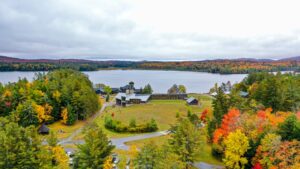
The landscape of culinary education is challenging, with many large players and thousands of options for students. For us, the question is how we differentiate ourselves in a way that’s true to the Paul Smith’s College experience. And one thing that’s uniquely Paul Smith’s is its 14,000- acre campus in the Adirondack wilderness. That gives us a specific niche that’s part of both the academic and college experience.
 Adventure hospitality gives us room to do novel things that other programs aren’t exploring. One objective we have is to build a multi-unit glamping campground—the first of its kind in hospitality education. Many hospitality schools have on-campus hotels; we would have an on-campus campground with four-season units, ski-in/ski-out options, three-season yurts, and
refractive glass structures. It would be a living classroom for students, the industry, and stakeholders.
Adventure hospitality also encompasses ideas such as lakeside dining cooked over a fire or building a food preservation lab for freeze-dried and dehydrated backcountry meals. Students would design, test, and experience these products and offerings. These foundational skills would serve them across the industry, giving them a unique edge, especially in resort destinations, national parks, and outdoor recreation-focused hospitality.
Q: From a student perspective, would they be involved in everything from planning to operations?
A: Yes, and even beyond that. The glamping campground has already become an academic project across disciplines. Parks and Recreation students did a site assessment and theoretical campground design, and Environmental Studies students conducted ecological impact assessments.
Once funding is secured, Forestry students would prepare the site, Sustainable Building students would help construct the structures, and Hospitality students would manage booking systems,
guest communication, and seasonal business planning. Culinary and Baking students would use the campground as another real-world outlet to engage with customers through food service events.
“One thing that’s uniquely Paul Smith’s is its 14,000-acre campus in the Adirondack wilderness. That gives us a specific niche that’s part of both the academic and college experience.”
Outdoor Recreation and Adventure Travel students could offer experiences such as weekend bike tours that start and end at the campground, with campfire meals and yoga sessions. There are many ways this could impact the academic experience. Based on industry precedent, we’re optimistic the campground could be self-sustaining, employ students, and add faculty and staff. It could be a real game-changer.
Q: What else is being done to revitalize culinary and hospitality programming?
A: There are two main buckets. First is rebuilding faculty and facilities. Our faculty unit has doubled, and we’ve brought in exciting new talent. Growing faculty means more teachable moments and more experiences for students.
 Our facilities are also improving through grants from foundations, state, and federal sources. These funds are allowing us to add features like hydroponic tower gardens, mushroom chambers, mobile wood-fired pizza ovens, an outdoor pavilion, and expanded chef’s demonstration gardens with a strong sensory component. The College has also reinvested in basic building maintenance through capital budgets, which has been exciting to see and is critical to the student experience.
The second bucket is admissions. We’ve been rebuilding relationships with BOCES high school culinary and baking programs, our primary feeder. Visiting those programs and connecting with instructors and students has already led to increased enrollment, with the trend continuing.
Q: How is this momentum impacting students currently in the classroom?
A: Students are feeling a groundswell of momentum. They have a faculty unit with renewed energy, improving facilities, and new partnerships. They’re seeing organizations like Cornell, Adirondack Harvest, and Harvest New York on campus, providing training for adult learners and professionals.
They’re also seeing industry partners visit campus, including restaurant takeovers and presentations. That makes students feel special—someone came to see them, to meet them—and it validates what they’re doing.
Students are also getting out into the world, meeting farmers and producers, and seeing the excitement those partners have for Paul Smith’s College. That builds pride in their craft and in studying here.
Q: Is there a student experience from this past semester that really stood out to you?
A: We did an event for the Paul Smith’s Alumni Association Hall of Fame banquet at the St. Regis restaurant. It included passed hors d’oeuvres, live-action plated small plates, and stationary food. I worked with a cross-section of students, including bakers, freshmen, and upperclassmen.
Seeing how students worked together and supported one another was really special. Upperclassmen took younger students under their wings, and alumni and administrators got to see students cooking live and practicing their craft.
It was a little stressful since it was our first event outside the academic building, but it went really well. It was also a great collaboration with campus dining, which helped with facilities and setup. It was a meaningful, rewarding experience from a teaching perspective.
Q: Looking 10 years ahead, what do you hope this program looks like?
A: I’d love to see a significantly expanded faculty with broader expertise and full utilization of our facilities, namely the lakefront restaurant, Ganzi, VIC kitchen, and the glamping campground. We have a lot of room to grow within the institution.
I’d also like to expand into Saranac Lake or Lake Placid through partnerships or independent ventures, such as a food lab or incubator with an attached food hall. Students could run senior capstone projects as real businesses serving the public.
The glamping campground would be a major asset for hospitality students. Our bakers have a bakery, our culinary students have a restaurant, but our hospitality students no longer have a hotel. That’s a missing piece, and this could help fill that gap.
Finally, I’d like to rebuild strong internship pipelines with local, national, and international hospitality partners. Internship programs are a strong relationship builder for students, and I’d love to see that fully reestablished here.
This article is from the Spring 2026 issue of the Paul Smith’s College Magazine.