
Welcome to your first field season.
Spend two weeks immersing yourself in nature and science in the Adirondacks. You’ll survey wildlife, sample lakes and forests, map your findings with GIS, and work alongside college faculty on one of the largest living laboratories in the country. Better yet, you will return home with college credit, practical field skills, and a much clearer picture of where your future could take you.
Summer 2027:
- June 15 – July 10 (Online self-paced asynchronous coursework): Lay foundation in ecological principles and prepare for fieldwork.
- July 11 – 24 (On campus): Engage in daily outdoor labs, practice GIS mapping and analysis, and integrating observation with scientific interpretation.
- Price: $1,995 (includes room, board, and instruction)
This program is designed for students ages 16–20 who are curious about the natural world and want to learn through hands-on experience. Whether you’re exploring environmental science as a future major, building your college résumé with real field research, or simply love being outdoors, you’ll gain practical skills while experiencing college life. No previous experience is required—just curiosity and a willingness to learn.
The Adirondack Field Ecology Experience
Here's What To Expect
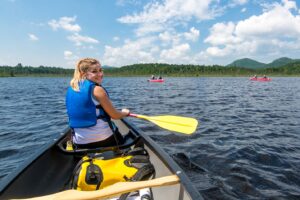
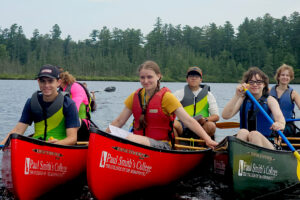
Explore Wildlife & Natural Ecosystems
Investigate the ecology of fish, mammals, birds, amphibians, invertebrates, and plants through hands-on field study.
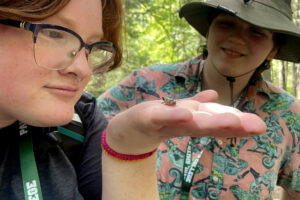
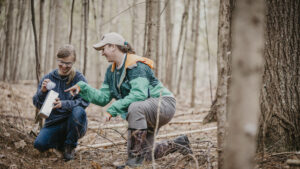
Learn Hands-On Field Research Skills
Practice sampling techniques including small mammal live-trapping, plant identification, and water quality sampling.
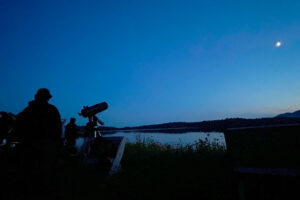
Collect and Analyze Data Outdoors
Learn and practice core ecological field techniques including small mammal live-trapping, plant identification, water quality sampling, fish collection methods, and forest measurements.
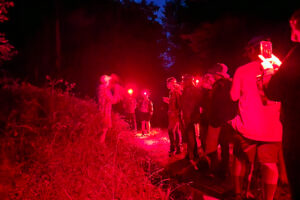
Map Your Findings with GIS
Use GIS to map field data for your final project, learning how spatial information supports ecological research.
Build Skills for College Success
Hone your study skills in preparation for college-level workloads.
Ready to Explore?
Register today and spend two weeks exploring forests, lakes, and wildlife while building real skills.
Course FAQ
This course is for students 16 to 20 years old.
Please review our complete list of essentials and recommendations for what to bring during your two week stay in the Adirondacks.
Housing is provided through Paul Smith’s College. You can expect to stay in dorm-style housing with two people of the same gender identity to a room and a shared bathroom and kitchen available for use.
If you foresee needing special housing accommodations, please reach out to us as soon as possible so that we can explore the options that will best support your success while you’re here.
Yes! Most colleges will take transfer credits, but it is always best to check with the specific college in advance. The course code for Adirondack Field Ecology is ENV 105, and it awards 4 credits upon completion. We have never had any students tell us it was a problem to transfer into their college, and even into some high schools.
The course modules are taught by both college or university-level faculty as well as external professionals in their areas of expertise.
No, you may attend the college of your choice.
If the student attends Paul Smith’s College, the credit is automatically applied upon enrolling. In order to transfer your credits to other schools (high school or college), you will need to Request a Transcript from the Registrar. There is no charge for the first transcript.
- Exploration of interests:You will explore many different areas in Ecology, which can help you determine what field you would like to pursue further in your college and career path.
- Hands-on experiences: ADK Field Ecology offers practical, hands-on field and classroom-based experiences. This can enhance your understanding of ecological concepts by applying them in real-world settings.
- Personal growth: Taking a college course as a high school student can contribute to personal growth by fostering independence, time management skills, and a sense of responsibility. It can also boost your confidence in tackling challenging academic material.
- Networking opportunities: ADK Field Ecology provides opportunities to interact with professors, researchers, and other students who share your interests. Building connections with professionals in the field can be beneficial for future educational and career opportunities.
Given that this is an immersive, field-based course, you can expect to be outdoors every day for several hours at a time. While there will certainly be breaks and quiet time, you will be on your feet and in the elements (rain or shine) for the majority of the time you are here. We recommend being able to walk 2 miles comfortably before arriving.
While we hope to support every student who wishes to participate, there are logistical and safety concerns that come with any remote wilderness experience. Unfortunately, not all of our infrastructure on campus or off-campus is accessible to those with certain mobility or medical needs. The closest hospital is 20 minutes away in Saranac Lake and it is a Level 1 facility that is not able to provide critical care for certain conditions. Please reach out as soon as possible to discuss any questions or concerns you may have related to accessibility on our Adirondack campus.
The cost for this 2-week course is $2,095 and includes tuition, fees, room and board. Travel to and from Paul Smith’s College is not included.
Questions? Contact Our Program Leader.
Faculty
Associate Professor of Wildlife Science